
Why PQC matters now is one of the most important questions in cybersecurity today. Post-quantum cryptography (PQC) is not just a technical topic for experts. It is a real-world issue that affects businesses, governments, and everyday users who rely on secure communication, online banking, encrypted messaging, and digital signatures.
If you want to understand why PQC matters now, this guide explains what PQC is, why it is becoming urgent, how it works, and what organizations should do to prepare.
Table of Contents
- What Is Post-Quantum Cryptography?
- Why PQC Matters Now
- What Is the Quantum Threat?
- How PQC Protects Data
- Who Needs PQC?
- Real-World Uses of PQC
- PQC vs. Classic Cryptography
- How to Prepare for PQC
- Common Mistakes to Avoid
- People Also Ask
- Frequently Asked Questions
- Key Takeaways
- Conclusion
What Is Post-Quantum Cryptography?
Post-quantum cryptography (PQC) is a new type of cryptography designed to protect data against attacks from future quantum computers. Unlike today’s encryption methods, which rely on mathematical problems that classical computers find difficult, PQC uses new mathematical approaches that are believed to be hard even for quantum machines
In simple terms, PQC is cryptography built to survive the quantum era

Why PQC Matters Now
Why PQC matters now comes down to three key reasons:
- Quantum computers are advancing faster than expected. While large-scale quantum computers may still be years away, research and investment are accelerating globally.
- “Harvest now, decrypt later” attacks are already happening. Hackers are stealing encrypted data today, knowing they can break it once quantum computers are available.
- Migrating to PQC takes time. Updating systems, testing new algorithms, and training teams is a long process. Waiting until quantum computers are real is too late.
This is why governments, tech companies, and security experts are urging organizations to start preparing for PQC now.
What Is the Quantum Threat?
Today’s encryption, like RSA and ECC, relies on math problems that are hard for classical computers but could be solved quickly by powerful quantum machines using Shor’s algorithm.
This means:
- Encrypted data stored today (like financial records, health data, or government secrets) could be decrypted in the future.
- Digital signatures used to verify software, contracts, or identities could be forged.
- Secure communication channels (like HTTPS, VPNs, or encrypted messaging) could be broken.
Even if quantum computers are not ready today, the risk is real because data has a long lifespan.
How PQC Protects Data
PQC uses new mathematical problems that are believed to be hard for both classical and quantum computers. These include:
- Lattice-based cryptography (used in many NIST-selected algorithms).
- Code-based cryptography.
- Hash-based signatures.
- Multivariate cryptography.
These methods are designed to:
- Encrypt data securely against quantum attacks.
- Sign digital documents in a way that cannot be forged.
- Exchange keys safely over public networks.
The goal is to make sure that even if a quantum computer exists, it cannot easily break the encryption.
Who Needs PQC?
PQC is not just for governments or big tech companies. It matters for:
- Businesses that store sensitive customer data.
- Healthcare providers that protect patient records
- Financial institutions that secure transactions
- Software developers that sign code and updates.
- Everyday users who rely on secure communication.
If your organization uses encryption today, you will need PQC tomorrow
Real-World Uses of PQC
PQC is already being tested and deployed in real-world systems:
- Secure messaging apps are testing PQC to protect chats from future attacks.
- Web browsers are starting to support PQC for HTTPS connections.
- Cloud providers are offering PQC options for data storage and key management.
- Governments are setting standards and timelines for PQC adoption.
For example, the U.S. National Institute of Standards and Technology (NIST) has selected several PQC algorithms for standardization, and companies like Google, Microsoft, and Cloudflare are already experimenting with them
PQC vs. Classic Cryptography
| Feature | Classic Cryptography | Post-Quantum Cryptography |
|---|---|---|
| Security Basis | Math problems hard for classical computers | Math problems hard for quantum and classical computers |
| Algorithms | RSA, ECC, Diffie-Hellman | Lattice-based, code-based, hash-based, multivariate |
| Key Size | Smaller keys (e.g., 2048-bit RSA) | Larger keys (e.g., several kilobytes) |
| Performance | Fast, well-optimized | Slower, more computational cost |
| Adoption | Widely used today | Emerging, in testing and early deployment |
While PQC is more resource-intensive, it is necessary for long-term security.
How to Prepare for PQC
Preparing for PQC does not mean replacing all your systems tomorrow. It means taking smart, gradual steps
- Inventory your cryptographic assets. Know where you use encryption, digital signatures, and key exchange.
- Prioritize high-value data. Focus on data that needs long-term protection (e.g., health records, financial data, government secrets)
- Start testing PQC algorithms. Use libraries and tools from NIST, Cloudflare, or open-source projects.
- Plan for hybrid systems. Combine classic and PQC algorithms during the transition
- Train your team. Make sure developers, IT staff, and security teams understand PQC basics.
- Follow standards. Use NIST-approved algorithms and follow government or industry guidelines
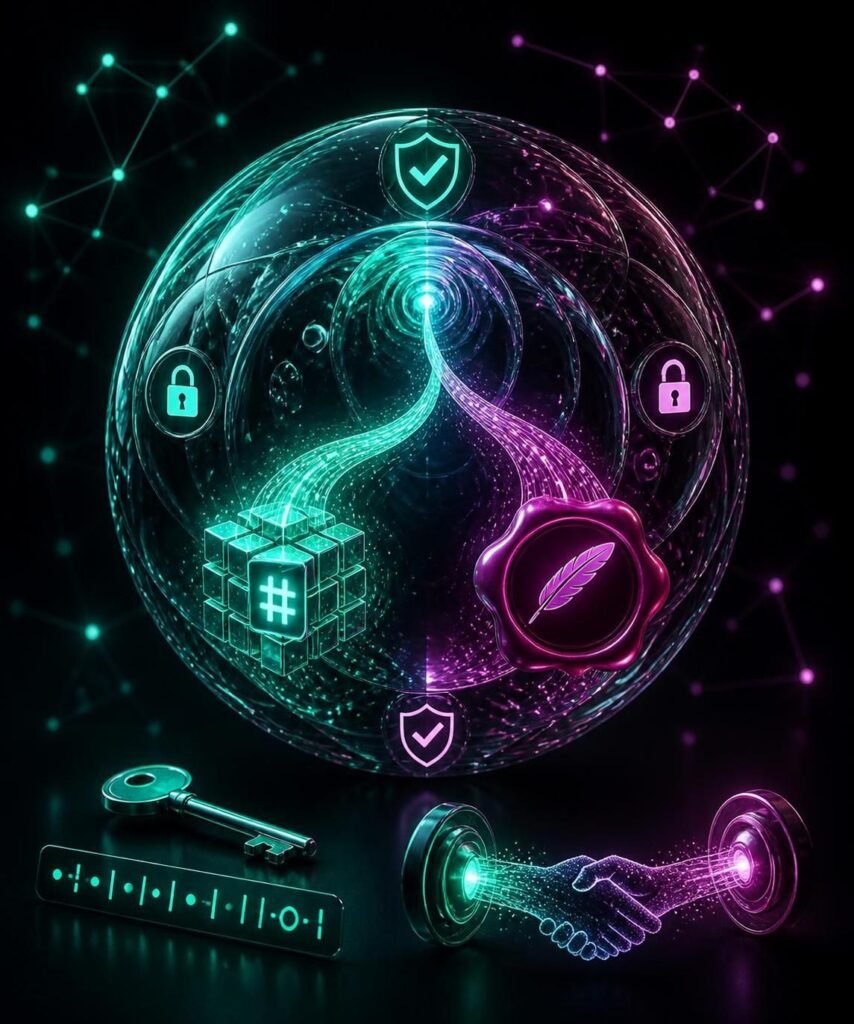
The goal is to be ready before quantum computers become a real threat.
Common Mistakes to Avoid
When preparing for PQC, organizations often make these mistakes:
- Waiting too long. Migrating to PQC takes years. Starting late means you may not be ready in time.
- Ignoring “harvest now, decrypt later” attacks. Hackers are already stealing encrypted data for future decryption.
- Using untested PQC algorithms. Stick to NIST-approved or widely tested methods
- Forgetting about digital signatures. Signatures are just as important as encryption
- Not planning for hybrid systems. A smooth transition requires using both classic and PQC methods together
Avoiding these mistakes helps ensure a safer and smoother transition
People Also Ask
Why PQC matters now?
Because quantum computers could break today’s encryption, and hackers are already stealing data for future decryption
What is the difference between PQC and quantum cryptography?
PQC is classical cryptography designed to resist quantum attacks. Quantum cryptography uses quantum physics (like QKD) to secure communication
Is PQC ready for use?
Yes, NIST has standardized several PQC algorithms, and companies are already testing them in real systems
How long will the transition take?
It could take 5–10 years to fully migrate large organizations to PQC
What happens if we don’t adopt PQC?
Sensitive data could be exposed, digital signatures could be forged, and secure systems could be broken.
Frequently Asked Questions
What is post-quantum cryptography?
PQC is cryptography designed to protect data against attacks from future quantum computers.
Why is PQC important?
Because quantum computers could break today’s encryption, putting sensitive data at risk.
Is RSA safe from quantum attacks?
No. RSA can be broken by quantum computers using Shor’s algorithm.
What are lattice-based algorithms?
A type of PQC that uses mathematical structures called lattices, believed to be hard for quantum computers.
Can I use PQC today?
Yes. Many libraries and tools support PQC algorithms, and some systems already use them.
What is “harvest now, decrypt later”?
A strategy where hackers steal encrypted data today, knowing they can break it once quantum computers are available.
How do I start preparing for PQC?
Inventory your cryptographic assets, test PQC algorithms, and follow NIST standards.
Will PQC replace all current encryption?
Eventually, yes. But the transition will be gradual, using hybrid systems first.
Is PQC slower than classic cryptography?
Yes, PQC algorithms are generally more computationally expensive, but they are necessary for long-term security.
Who should care about PQC?
Any organization that uses encryption, digital signatures, or secure communication should care about PQC.
Key Takeaways
- PQC is cryptography designed to resist quantum attacks.
- Why PQC matters now is because quantum computers could break today’s encryption.
- Hackers are already stealing data for future decryption.
- PQC uses new math problems that are hard for both classical and quantum computers.
- Businesses, governments, and users all need PQC to protect sensitive data.
- Preparing for PQC takes time, so start now.
- Follow standards like NIST-approved algorithms.
- Hybrid systems (classic + PQC) will help during the transition.
Conclusion
Why PQC matters now is not just a technical question. It is a question of security, trust, and long-term protection for data that matters.
Post-quantum cryptography is the next step in keeping digital communication safe. It is not about replacing everything overnight, but about preparing smartly, testing new methods, and following standards.
If you want to protect your data, your customers, and your systems for the future, start learning about PQC today. The quantum era is coming, and being ready is the best way to stay secure.