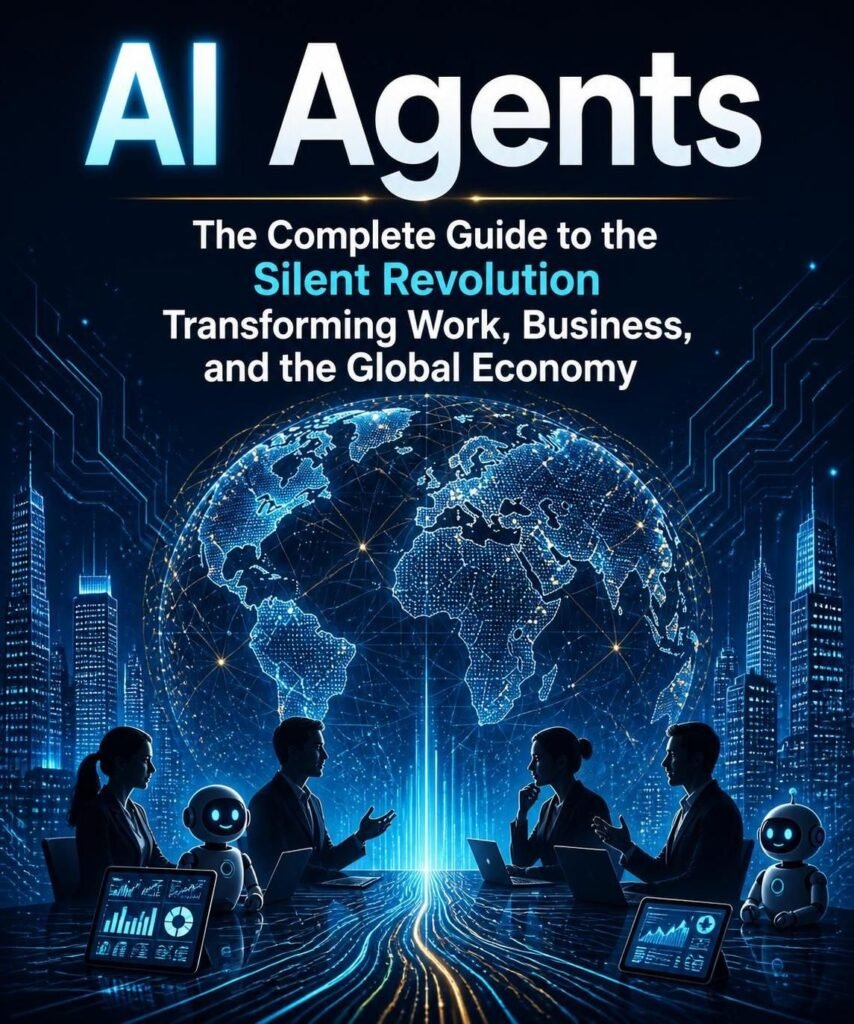
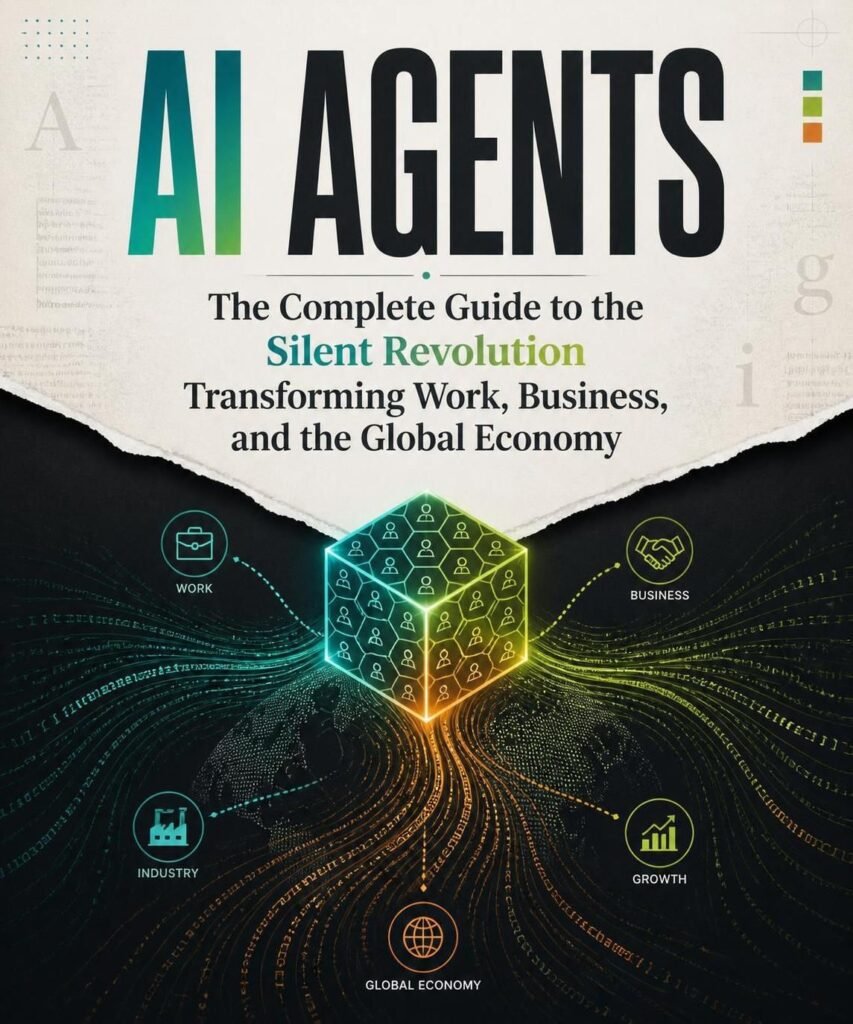
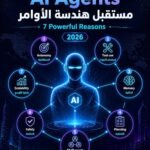
AI Agents in 2026: The Silent Revolution Transforming Work, Business, and the Global Economy
📌 Understanding AI Agents and the Beginning of a Silent Revolution
📚 Table of Contents
Introduction: Why AI Agents Matter in 2026 What AI Agents Really Are How AI Agents Differ from Traditional AI Why This Revolution Is “Silent” How AI Agents Work in Real Life (Simple Explanation) The Technologies Behind AI Agents 1. Introduction: Why AI Agents Matter in 2026
AI agents are no longer a future idea. They are already part of how modern companies operate, even if most people do not notice them.
In 2026, businesses are not asking “Should we use AI?” anymore. The real question is “How fast can we integrate AI agents into our daily operations?”
The reason is simple. Work has changed. Companies now deal with massive amounts of data, customers expect faster responses, and competition moves at digital speed. In this environment, humans alone cannot process everything in real time.
This is where AI agents quietly enter the picture. They do not replace humans in a dramatic way. Instead, they slowly integrate into workflows, handling tasks that are repetitive, time-consuming, or data-heavy.
For example, when a customer buys a product online and receives instant updates, personalized recommendations, and fast support responses, there is often an AI agent working behind the scenes. The customer does not see it—but the system is powered by it.
This is why experts call it a silent revolution
2. What AI Agents Really Are
An AI agent is a system that can understand a goal, break it into steps, and complete tasks with minimal human intervention.
But the real difference between AI agents and traditional software is autonomy.
Traditional software waits for instructions. AI agents act with purpose.
For example, if you ask a simple AI chatbot, “Write me a marketing plan,” it will generate text. But an AI agent goes further. It may analyze your business, research competitors, identify target audiences, and even prepare a structured campaign plan with timelines and suggested actions.
A useful way to understand AI agents is to think of them as digital workers. Not humans, but systems that can perform structured work in a semi-independent way.
They don’t just respond—they execute.
3. How AI Agents Differ from Traditional AI
To understand the impact of AI agents, we need to compare them with earlier forms of AI.
Traditional AI systems were mostly reactive. They followed rules or responded to specific inputs. For example, a recommendation system on an online store suggests products based on your browsing history, but it does not take actions beyond that.
AI agents are different because they are goal-driven systems.
Instead of reacting, they plan.
For example, imagine a company wants to increase online sales by 20%. A traditional AI tool might give reports or insights. But an AI agent can go further by analyzing customer behavior, testing pricing strategies, optimizing ads, and continuously improving campaigns.
This shift from “analysis” to “action” is what makes AI agents powerful.
4. Why This Revolution Is “Silent”
Unlike previous technological revolutions, AI agents are not being introduced with a single global event.
There is no single moment where everything changed.
Instead, companies are gradually embedding AI agents into existing systems—customer service, marketing, logistics, finance, and even internal operations.
This is why most people do not realize how widespread they already are.
For example, when you receive an instant response from an airline chatbot, or when your banking app detects suspicious transactions immediately, there is a high chance an AI agent is working in the background.
It feels like normal software, but it is actually intelligent automation.
The revolution is silent because it is invisible.
5. How AI Agents Work in Real Life (Simple Explanation
To understand AI agents in a practical way, imagine a simple business task: launching a product online.
A human team would normally:
Research the market Create marketing content Design campaigns Analyze performance Adjust strategy
An AI agent can now assist or even automate parts of this process.
First, it understands the goal: launch and promote a product.
Then it breaks the task into steps. It may collect market data, analyze competitors, and identify customer preferences. After that, it can generate content ideas, suggest advertising strategies, and monitor performance after launch.
The key idea is not that AI replaces humans, but that it handles structured thinking and execution at scale.
6. The Technologies Behind AI Agents
AI agents are built on several important technologies working together.
The most important is Large Language Models (LLMs), which allow the system to understand language and generate meaningful responses.
Another key component is memory systems, which allow AI agents to remember past interactions and improve over time. This is what makes them feel more “intelligent” than traditional tools.
They also use tool integration, which allows them to connect with external systems like databases, APIs, email platforms, and CRM software.
Finally, there is planning logic, which allows AI agents to break large goals into smaller steps and execute them in sequence.
When all these systems work together, the result is an AI agent that can act like a digital assistant—but much more advanced.
AI Agents in Business: How Companies Are Quietly Transforming Work in 2026
7.AI Agents in Modern Business Operations
In 2026, AI agents are no longer experimental tools used only by tech companies. They have become part of everyday business operations across industries like retail, finance, healthcare, logistics, and software development.
What makes this shift interesting is that it did not happen through sudden disruption. Instead, companies gradually integrated AI agents into existing workflows. Employees often continue working in familiar systems, while AI agents quietly handle the most repetitive and data-heavy tasks in the background.
For example, in many online businesses, customer support used to depend entirely on human agents responding to thousands of repetitive questions. Today, AI agents can handle a large portion of these interactions instantly. When a customer asks about a delayed order, the system does not just reply with a generic message. It can access shipping data, detect the exact issue, and provide a personalized update in seconds.
This change does not eliminate human support teams. Instead, it reshapes their role. Humans now focus on complex cases, emotional conversations, and problem-solving situations that require judgment and empathy.
8. AI Agents in Marketing: From Guesswork to Precision
Marketing has always depended on understanding human behavior. But in the digital world, behavior is no longer simple. Customers interact with brands across multiple platforms, devices, and channels, making it difficult for humans alone to track and analyze everything.
AI agents solve this problem by continuously observing patterns and transforming raw data into actionable decisions.
For example, imagine an online fashion brand launching a seasonal campaign. Instead of manually guessing what customers might like, an AI agent analyzes browsing history, past purchases, and engagement behavior. It then identifies which customers are more likely to respond to discounts, which prefer new arrivals, and which respond better to email or social media.
A report from McKinsey highlights that companies using AI-driven marketing systems can significantly improve customer engagement and campaign efficiency compared to traditional approaches. This is not because AI replaces creativity, but because it removes uncertainty from decision-making.
In practice, marketers are no longer spending most of their time collecting data. Instead, they focus on strategy and storytelling while AI agents handle segmentation, timing, and performance analysis.
9.AI Agents in Sales: Turning Data into Action
Sales teams traditionally spend a large part of their time on administrative work. Updating customer records, writing follow-up emails, scheduling meetings, and tracking leads often takes more time than actual selling.
AI agents are changing this structure in a very practical way.
After a sales call, an AI agent can automatically summarize the conversation, update the CRM system, and suggest the next step based on customer interest. If a client shows strong buying intent, the system can prioritize that lead and notify the sales representative immediately.
For example, in a software company selling enterprise solutions, a potential client might request pricing information and ask technical questions during a meeting. While the salesperson moves on to the next task, the AI agent is already preparing a follow-up email, analyzing similar past deals, and suggesting a personalized proposal strategy.
According to PwC research on workplace AI adoption, employees who use AI tools daily report significantly higher productivity compared to occasional users. This reflects a broader shift: AI agents are not replacing sales teams but increasing their capacity to handle more clients in less time.
10. AI Agents in Healthcare: Supporting Human Decisions
Healthcare is one of the most sensitive and complex environments for AI adoption. Here, accuracy and responsibility are critical. AI agents are not replacing doctors, but they are significantly improving how medical information is processed and organized.
In many hospitals, doctors spend a large portion of their time on documentation rather than direct patient care. AI agents help reduce this burden by automatically structuring patient notes, summarizing medical history, and organizing test results before a consultation.
For example, when a patient arrives with multiple symptoms, an AI agent can quickly gather past medical records, highlight relevant conditions, and prepare a structured summary for the physician. The doctor still makes all final decisions, but the preparation time is significantly reduced.
A healthcare study from Deloitte shows that administrative inefficiencies are one of the biggest challenges in modern healthcare systems. AI agents help address this issue by allowing medical professionals to focus more on patients rather than paperwork.
11. AI Agents and the Global Economy
The impact of AI agents goes far beyond individual companies. They are gradually reshaping how productivity is measured across entire economies.
In the past, economic growth was strongly linked to industrial automation and physical production efficiency. Today, a large portion of economic value comes from information processing, decision-making, and digital workflows.
AI agents directly improve this layer of the economy.
A widely cited PwC report estimates that AI could contribute trillions of dollars to the global economy by 2030 through productivity gains and improved business efficiency. While not all of this growth comes from AI agents specifically, they represent one of the key driving forces behind this transformation.
What is particularly important is that AI agents reduce the gap between large and small businesses. In the past, large companies had a clear advantage because they could hire more employees and build bigger teams. Now, smaller companies can scale faster by using AI agents to automate core operations without proportional cost increases.
This creates a more competitive and dynamic global market.
12. A Real-World Case Study: Efficiency Through AI Integration
To understand the real impact of AI agents, consider a mid-sized European e-commerce company that integrated AI into its operations in 2024 and expanded its usage in 2025 and 2026.
Before AI adoption, the company struggled with three main challenges: slow customer response times, inconsistent marketing performance, and rising operational costs.
Instead of replacing employees, the company introduced AI agents to support three key areas.
In customer service, AI agents handled routine inquiries such as order tracking, return policies, and payment issues. This allowed human agents to focus only on complex cases requiring empathy or negotiation.
In marketing, AI agents analyzed customer behavior across regions and suggested personalized campaigns. Instead of running the same campaign globally, the company began adapting messages based on local preferences and seasonal trends.
In operations, AI agents monitored inventory levels in real time and predicted demand using historical and live data. This helped reduce both overstocking and product shortages.
After several months, the company reported a significant improvement in operational efficiency and customer satisfaction. More importantly, it was able to scale its business without a proportional increase in staff, demonstrating how AI agents can support sustainable growth
📌 The Future of AI Agents, Risks, and the Complete SEO Conclusion https://www.mckinsey.com/capabilities/quantumblack/our-insights/the-state-of-ai → Global AI adoption and business transformation insights https://www.pwc.com/gx/en/issues/artificial-intelligence.html → AI economic impact and workforce transformation
The Risks and Limitations of AI Agents
Even though AI agents are becoming more advanced and widely used, they are not perfect systems. Understanding their limitations is important for any business that wants to use them safely and effectively.
One of the most important challenges is data dependency. AI agents rely heavily on the quality of the data they receive. If the data is incomplete, outdated, or biased, the decisions made by the AI can also be inaccurate. For example, if a sales AI agent is trained on old customer behavior data, it may suggest marketing strategies that no longer match current market trends.
Another limitation is lack of true understanding. AI agents do not understand context in the same way humans do. They process patterns, probabilities, and structured information. This means they can sometimes miss emotional or situational details that are obvious to humans. In customer service, for example, a frustrated message may be interpreted as a normal inquiry if emotional signals are not clearly structured in the data.
There is also the issue of over-reliance. Some companies may become too dependent on automation, reducing human oversight. While AI agents can handle many tasks efficiently, they still require supervision, especially in critical industries like healthcare, finance, and legal services.
Because of this, most successful organizations adopt a hybrid model where AI agents assist humans rather than fully replacing them.
The Future of AI Agents (2026 and Beyond)
The evolution of AI agents is still in its early stages. What we see today is only the beginning of a much larger transformation.
One of the most important future developments is persistent memory. Future AI agents will not only respond to tasks but also remember long-term context. This means they will understand user preferences, business goals, and previous decisions over time, making them more personalized and efficient.
Another major shift will be multi-agent collaboration systems. Instead of one AI agent handling everything, multiple specialized agents will work together like digital teams. For example, one agent might analyze data, another might generate strategy, and another might execute tasks in real time. These systems will behave more like coordinated organizations than isolated tools.
We are also moving toward proactive AI agents. Instead of waiting for instructions, they will detect problems and opportunities on their own. For example, an AI agent in logistics might identify a potential delivery delay and automatically reroute shipments before the problem affects customers.
According to insights from global AI research organizations, businesses are increasingly investing in these autonomous systems because they significantly reduce decision-making time and operational friction across departments.
Why Human + AI Collaboration Will Define the Future
Despite all the progress in AI technology, the future is not about replacing humans. It is about collaboration.
AI agents are extremely powerful when it comes to processing data, identifying patterns, and executing structured tasks. However, humans still lead in creativity, emotional intelligence, ethical reasoning, and strategic decision-making.
In real-world environments, the best results come from combining both strengths.
For example, in business strategy, AI agents can analyze market trends and customer behavior at scale. But humans are needed to interpret these insights and make final decisions based on experience, intuition, and long-term vision.
This combination creates a new type of workforce where humans and AI systems operate together. Humans become decision-makers and creative thinkers, while AI agents become execution partners that increase speed and efficiency.
Final Case Insight: The Shift from Tools to Systems
One of the most important changes happening with AI agents is the shift from “tools” to “systems.”
In the past, businesses used separate tools for different tasks—one for marketing, one for analytics, one for customer support. Each system worked independently, requiring manual coordination.
AI agents are changing this structure by connecting these systems into a unified workflow.
For example, when a customer interacts with a company online, the AI agent does not just respond. It may also update the CRM, trigger a marketing automation sequence, analyze customer behavior, and adjust future recommendations—all within one connected system.
This shift is subtle but powerful. It transforms businesses from fragmented workflows into intelligent, interconnected systems.
Frequently Asked Questions (FAQ) What are AI agents in simple words?
AI agents are software systems that can understand goals, plan steps, and complete tasks automatically with minimal human input.
How are AI agents different from AI chatbots?
Chatbots respond to questions, while AI agents can perform full tasks, make decisions, and use tools to complete workflows.
Will AI agents replace human jobs?
AI agents are more likely to change jobs rather than replace them. They handle repetitive tasks while humans focus on creative and strategic work.
Which industries benefit most from AI agents?
Industries like customer service, healthcare, finance, marketing, logistics, and software development benefit the most because they involve structured digital processes.
Are AI agents safe to use in business?
Yes, but they require proper supervision, good data quality, and secure system integration to ensure reliable performance.
Conclusion:
The Silent Revolution is Already Here
AI agents represent one of the most important technological shifts of this decade. Unlike previous innovations, this transformation is not happening in a visible or dramatic way. Instead, it is slowly integrating into everyday systems, improving efficiency, decision-making, and productivity across industries.
The real impact of AI agents is not only automation. It is the ability to combine intelligence with execution. Businesses are no longer just analyzing information—they are acting on it in real time.
Companies that adopt AI agents early are already seeing improvements in speed, cost efficiency, and scalability. At the same time, those that delay adoption risk falling behind in a competitive, data-driven global economy.
The future will not be defined by humans versus machines. It will be defined by how effectively humans and AI agents work together.
About the Author
Author: Maryam Maryam is a professional writer and researcher with over 15 years of combined experience in psychology and investment strategy. Her work focuses on understanding human behavior, decision-making, and how psychological principles influence modern business, financial markets, and technology adoption.
Throughout her career, she has studied how individuals and organizations respond to rapid technological change, especially in areas such as artificial intelligence, digital transformation, and automated decision systems. This interdisciplinary background allows her to bridge the gap between human behavior and emerging technologies.
Her writing style is based on simplifying complex topics into clear, practical insights that can be understood by both beginners and professionals. She emphasizes real-world application, evidence-based analysis, and long-term thinking in business and investment decisions.
Maryam’s perspective is shaped by both psychological research and financial market experience, giving her a unique ability to explain how AI-driven systems like AI agents influence not only business performance, but also human behavior, productivity, and economic decision-making.
She regularly explores topics related to:
Behavioral psychology in business decisions Investment strategies in technology-driven markets Artificial intelligence and economic transformation Future of work and digital automation
Her goal is to make complex technological and financial concepts accessible, practical, and useful for real-world decision-making.