
The $45 Billion Question: Why Multimodal AI Is Different This Time
In Q2 2026, Alphabet reported something extraordinary: Google Cloud revenue jumped 82% year-over-year to $24.8 billion, driven almost entirely by AI-centric workloads. Nearly 90% of Fortune 100 companies now use Gemini Enterprise.
This is not another AI hype cycle. This is the multimodal inflection point.
While traditional generative AI processes text alone, multimodal AI simultaneously interprets and generates text, images, audio, video, and sensory data. The difference is analogous to giving AI eyes, ears, and a voice—not just a keyboar
The numbers validate the shift. Gartner forecasts worldwide AI spending will reach $2.52 trillion in 2026, up 44% year-over-year, with generative AI model spending growing 80.8%.
But here is what most analysts miss: the money is not in the models. It is in the multimodal infrastructure layer.
The M-V-A Framework: How to Evaluate Multimodal AI Investments
After analyzing Q2 2026 earnings from every major AI player, I developed the M-V-A Framework to separate investable multimodal AI opportunities from speculative bets:
| Dimension | What to Measure | Why It Matters in 2026 |
|---|---|---|
| M — Modality Integration Depth | How many data types (text, image, audio, video, sensor) the system processes natively | Surface-level integration (e.g., chatbots with image upload) is commoditized. Deep fusion (real-time video + audio + text reasoning) creates moats. |
| V — Vertical Application Moat | Industry-specific data pipelines and regulatory compliance | Generic multimodal APIs are racing to zero. Healthcare, defense, and industrial multimodal AI command 10x premiums. |
| A — Agentic Revenue Conversion | Transition from seat-based SaaS to consumption-based agent billing | Microsoft and Google are pivoting from $30/user/month to usage credits. The first to report agent-specific revenue wins. |
The Infrastructure Layer: Where $2.9 Trillion Meets Silicon
Morgan Stanley describes AI investment as “industrial build-out” rather than speculative tech spending. With nearly $2.9 trillion in infrastructure spending projected over the next decade, the multimodal AI stack requires unprecedented computational density.
NVIDIA: The $81.6 Billion Quarter
NVIDIA’s Q1 FY2027 data center revenue hit $75.2 billion, with CEO Jensen Huang predicting at least $1 trillion in revenue from Blackwell and Rubin chips through 2027.
The critical insight: multimodal AI training requires 10-100x more compute than unimodal LLMs. Each additional modality—vision, audio, video—multiplies parameter counts and inference costs. NVIDIA’s moat widens because no alternative (AMD, custom silicon) yet matches CUDA’s ecosystem lock-in for cross-modal workloads.
The Memory Bottleneck: Micron’s 594% Run
Micron Technology (MU) delivered a 594% one-year return—the best-performing AI stock of 2026. Why? Multimodal models require High Bandwidth Memory (HBM) at scale. Micron is the only American manufacturer of HBM3E, and supply remains critically constrained.
Investment implication: HBM supply, not GPU supply, is the binding constraint for frontier multimodal models in late 2026.
The Platform Wars: Google vs. Microsoft — By the Numbers
Google: The Multimodal Native
Alphabet’s Q2 2026 results reveal a company betting everything on multimodal AI:
- Total revenue: $119.8 billion (+24% YoY)
- Google Cloud: $24.77 billion (+82% YoY)
- Operating income: $40.77 billion (+30% YoY)
- Contracted backlog: $514 billion
Sundar Pichai’s strategy is clear: Gemini is not a chatbot. It is an operating system for enterprise AI. With nearly 500 cloud customers each processing over 1 trillion tokens annually, Google’s multimodal API consumption is becoming a utility-like revenue stream.
The risk: Alphabet raised 2026 CapEx guidance to $195–$205 billion while free cash flow turned negative. This is a $200 billion bet that multimodal AI becomes the next search.
Microsoft: The Distribution King
Microsoft’s Q4 FY2026 results show a different multimodal path:
- Total revenue: $90.0 billion (+18%)
- Microsoft Cloud: $59.3 billion (+27%)
- Azure: Surpassed $100 billion annualized revenue for the first time
- Copilot paid seats: Over 30 million (up from 20 million just one quarter earlier)
Microsoft’s advantage is not model superiority—it is distribution. With 450 million Microsoft 365 commercial seats, Copilot’s multimodal capabilities (Teams video analysis, Outlook email + attachment understanding, PowerPoint image generation) reach enterprise users without procurement friction.
The critical metric to watch: Average Revenue Per User (ARPU) in M365 Commercial Cloud. If usage credits (consumption layer) begin contributing meaningfully to ARPU in Q1 FY2027, Microsoft’s multimodal monetization thesis is proven.
Enterprise Adoption: The 83% vs. 42% Divide
Multimodal AI adoption is splitting the economy in two. Per Gartner research compiled in August 2026:
- 83% of companies with 5,000+ employees have deployed AI in production
- Only 42% of firms with 50–499 employees have done the same
The average enterprise now runs 4.2 AI models simultaneously—up from 1.9 in 2023. Enterprises are not choosing between ChatGPT and Claude. They are running ChatGPT for customer content, Claude for document analysis, GitHub Copilot for developers, and industry-specific multimodal models for specialized workflows.
The SMB opportunity: The bottleneck is not technology—it is implementation capacity. Small businesses that deploy AI report comparable productivity gains to enterprises. This gap creates a massive addressable market for multimodal AI tools with zero-setup deployment.
Agentic AI: The $45 Billion Multimodal Frontier
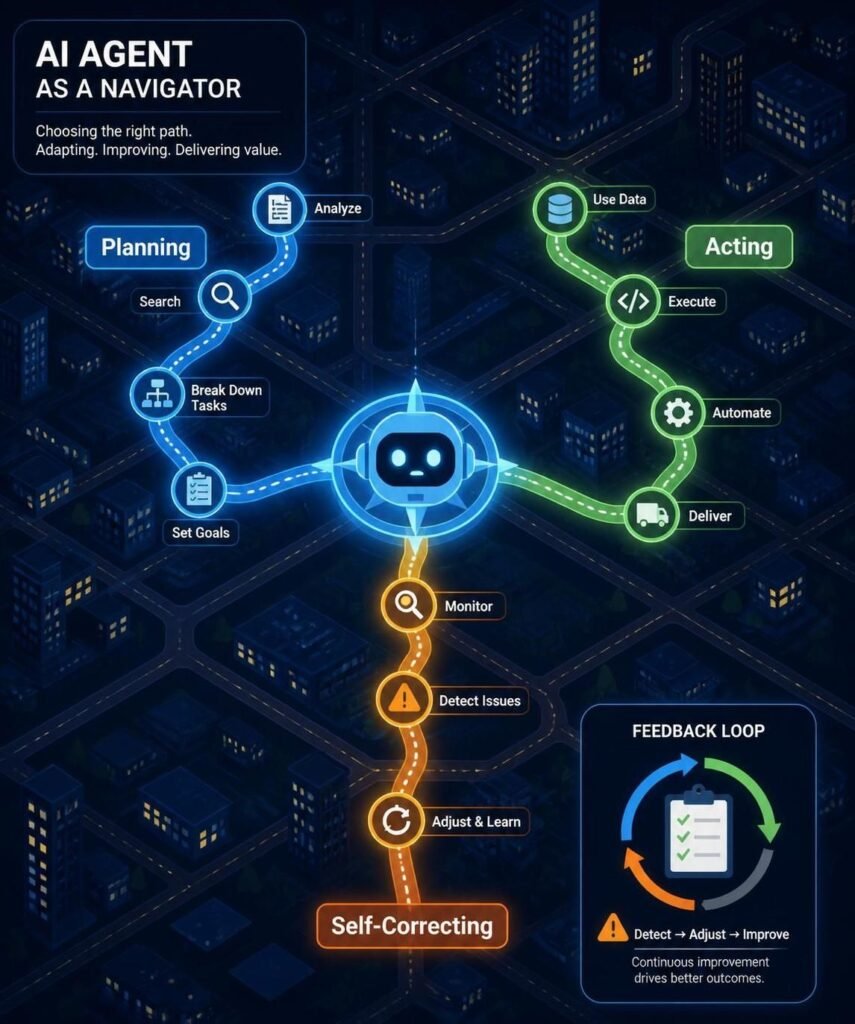
Multimodal AI is converging with agentic AI—systems that autonomously plan, decide, and execute workflows. The numbers are staggering:
| Metric | Figure | Source |
|---|---|---|
| Global agentic AI market (2026) | $45.1 billion | Globe Market Research |
| Organizations experimenting with AI agents | 62% | McKinsey/S&P Global |
| Enterprises with agents in production | 31% | S&P Global/McKinsey |
| Enterprise apps embedding agents by end-2026 | 40% | Gartner forecast |
The catch: Gartner projects 40%+ of agentic AI projects will be canceled by 2027 due to unclear ROI, escalating costs, and inadequate risk controls.
Investment translation: Bet on the infrastructure and platform layers (NVIDIA, Google Cloud, Azure), not individual agent startups with unproven unit economics.
The 2026 Multimodal AI Stock Scorecard
Based on the M-V-A Framework, here is how the major publicly traded players rank:
Tier 1: Infrastructure Moats (BUY)
| Stock | Ticker | Multimodal Position | Key Metric | Risk |
|---|---|---|---|---|
| NVIDIA | NVDA | Blackwell/Rubin chips = multimodal training monopoly | $75.2B data center revenue (Q1 FY27) | Valuation; custom silicon competition |
| Micron | MU | Only US HBM manufacturer; multimodal memory bottleneck | +594% one-year return | Cyclical memory pricing |
| Alphabet | GOOGL | Gemini Enterprise = multimodal cloud OS | 90% Fortune 100 adoption; $514B backlog | $200B CapEx; negative FCF |
| Microsoft | MSFT | Copilot distribution across 450M seats | 30M paid Copilot seats; Azure >$100B ARR | Agent monetization unproven |
Tier 2: Vertical Applications (WATCH)
| Company | Focus | Multimodal Edge |
|---|---|---|
| Intuitive Surgical | Healthcare robotics | Da Vinci multimodal (video + haptics + vitals) |
| Tesla | Autonomous vehicles | FSD v13 fuses camera + LiDAR + radar + audio |
| Palantir | Defense/intelligence | Multimodal intelligence for national security |
Tier 3: Avoid (COMMODITIZED)
- Generic chatbot wrappers
- Single-modal AI tools without data moats
- Companies with “AI” in press releases but not in R&D spend
Three Catalysts That Will Move Markets in Late 2026
Catalyst 1: Microsoft Ignite (November 17–20, 2026)
Microsoft will announce:
- Frontier Tuning GA pricing — converts pipeline to bookings
- Copilot Studio agent billing structure — determines margin structure for agentic layer
- Microsoft IQ enterprise tier pricing — first true consumption revenue disclosure
Catalyst 2: NVIDIA GTC Fall 2026
Jensen Huang’s Rubin architecture reveal. If Rubin delivers 10x inference efficiency for multimodal workloads, NVIDIA’s $1 trillion revenue target becomes conservative.
Catalyst 3: Q1 FY2027 Earnings (October 2026)
First quarter where:
- Microsoft IQ revenue registers materially
- Copilot seat acceleration is reported, not guided
- Agentic AI revenue may exceed Copilot assistant revenue for the first time
The Hard Truth: What Could Go Wrong
1. The CapEx Trap
Microsoft is spending $190 billion on CapEx in FY2026. Alphabet is spending $195–205 billion. If multimodal AI adoption plateaus, these become stranded assets
2. The Regulatory Guillotine
Congress is moving forward on an AI “Kill-Switch” bill targeting large AI SaaS providers. Multimodal systems with persistent memory face existential regulatory risk
3. The 40% Failure Rate
Most agentic AI projects will fail. Gartner’s 40%+ cancellation rate by 2027 means enterprise software vendors may see multimodal AI revenue evaporate just as quickly as it appeared.
The Bottom Line: How to Position for Q4 2026
Multimodal AI is not a trend. It is the architecture of the next computing platform. But the winners will not be determined by who has the best demo—they will be determined by who converts multimodal capabilities into durable, profitable revenue.
For investors:
- Core position: NVIDIA (infrastructure) + Alphabet (platform)
- Speculative: Micron (memory bottleneck) + vertical AI leaders
- Avoid: Any company whose multimodal strategy is a chatbot with image upload
For enterprises:
- Audit your data assets across text, image, audio, and video
- Pilot multimodal AI in high-ROI vertical use cases (not generic chat)
- Negotiate consumption-based pricing before vendors lock in seat-based models
For founders
- Build on top of Gemini/Claude/GPT-4o APIs, but add proprietary multimodal data pipelines
- Target the 42% SMB gap—implementation simplicity is the new moat
FAQ: Multimodal AI Investment Questions
Q: What is multimodal AI vs. generative AI?
Generative AI creates content. Multimodal AI processes and correlates multiple data types (text + image + audio + video) simultaneously. All frontier models in 2026 are becoming multimodal; unimodal models are legacy
Q: Is multimodal AI more expensive to deploy?
Yes. Inference costs for multimodal models are 5–20x higher than text-only LLMs. This is why infrastructure plays (NVIDIA, cloud providers) capture disproportionate value.
Q: Which multimodal AI stock is safest for 2026?
NVIDIA has the most durable moat due to CUDA ecosystem lock-in. Alphabet offers the best risk/reward given $514 billion in contracted backlog. Microsoft has the widest distribution but the most unproven monetization
Q: What is the biggest risk to multimodal AI investments?
Regulatory intervention and CapEx overbuild. If governments mandate multimodal AI transparency/auditing, compliance costs could crush margins. If cloud providers overbuild capacity before demand materializes, 2027 could see a brutal infrastructure correction
Q: When will multimodal AI generate profits, not just revenue?
Google Cloud’s operating margin reached 35.6% in Q2 2026—proof that scaled multimodal AI can be profitable. The question is whether this margin sustains as competition intensifies
Conclusion: The Multimodal Moment
In August 2026, we are at the intersection of three exponential curves:
- Compute: Blackwell/Rubin chips delivering 10x efficiency gains
- Adoption: 83% of large enterprises in production; 62% experimenting with agents
- Revenue: Google Cloud +82%, Azure >$100B, Copilot 30M seats
The investors who recognize that multimodal AI is an infrastructure story first, a platform story second, and an application story third will capture the lion’s share of returns.
The rest will chase chatbots.
Related Analysis:
- The Agentic AI Market Map: From $8.6B to $373B by 2035
- NVIDIA’s $1 Trillion Bet: Blackwell, Rubin, and Beyond
- Microsoft Copilot: The ARPU Inflection Point Investors Are Missing
- Why HBM Memory, Not GPUs, Is the Real AI Bottleneck in 2026
.