
Symmetric vs asymmetric encryption is one of the most important topics in cybersecurity and cryptography. Both methods protect sensitive data, but they do it in very different ways. Understanding the difference between them helps explain how secure websites, encrypted messaging, online banking, digital signatures, and password protection work.
If you want a clear answer to what is the difference between symmetric and asymmetric encryption, this guide explains how each one works, where each one is used, and why modern security systems often combine both
Last night I saw news on social media that Donald Trump signed an agreement regarding this matter, and it seems that this will be the future, so we must work on it
Table of Contents
- What Encryption Means
- What Is Symmetric Encryption?
- What Is Asymmetric Encryption?
- Symmetric vs Asymmetric Encryption
- Key Differences Between the Two
- Advantages and Disadvantages
- Real-World Uses
- How HTTPS Uses Both Methods
- Passwords, Digital Signatures, and Key Exchange
- Which One Is More Secure?
- When to Use Each One
- FAQ
- Conclusion
What Encryption Means
Encryption is the process of turning readable information into unreadable data so unauthorized people cannot access it. The readable version is called plain text, and the protected version is called cipher text.
Encryption is essential for data security, online privacy, and secure communication. It helps protect files, messages, transactions, and sensitive records from hackers or anyone who should not see them.
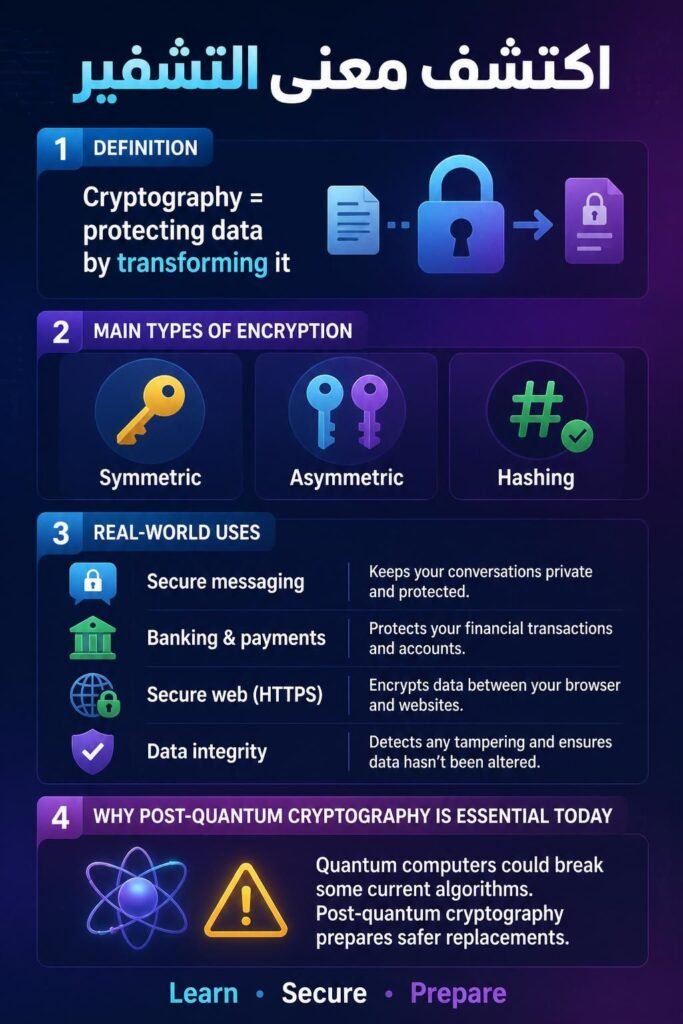
There are two main types of encryption: symmetric encryption and asymmetric encryption. Both are widely used, but they serve different purposes

What Is Symmetric Encryption?
Symmetric encryption uses the same secret key for both encryption and decryption. That means the sender and receiver must both have access to the same key.
For example, if one person encrypts a file using symmetric encryption, the other person must use the same key to open it. This makes symmetric encryption fast, efficient, and practical for large amounts of data.
Because one key is shared on both sides, symmetric encryption is often called secret key encryption.
Common Symmetric Encryption Algorithms
Popular symmetric encryption algorithms include:
- AES (Advanced Encryption Standard).
- DES (Data Encryption Standard).
- 3DES.
- Blowfish.
- Twofish.
Among these, AES encryption is the most widely used today because it is fast, reliable, and trusted in many modern systems.
Where Symmetric Encryption Is Used
Symmetric encryption is commonly used for:
- File encryption.
- Disk encryption.
- Database protection.
- VPN traffic.
- Secure messaging after a session key is created.
- Encrypting large data transfers
It is especially useful when performance matters because it is much faster than asymmetric encryption.
What Is Asymmetric Encryption?
Asymmetric encryption uses two different keys:
- A public key.
- A private key.
The public key can be shared with anyone, but the private key must stay secret. Data encrypted with the public key can only be decrypted with the private key
This is why asymmetric encryption is also known as public key encryption.
Common Asymmetric Encryption Algorithms
Well-known asymmetric encryption systems include:
- RSA.
- ECC (Elliptic Curve Cryptography).
- Diffie-Hellman key exchange.
- ElGamal
These are used in secure communication systems, certificates, identity verification, and digital signatures
Where Asymmetric Encryption Is Used
Asymmetric encryption is commonly used for:
- Secure key exchange.
- Digital signatures.
- SSL/TLS certificates.
- Secure email
- Public key infrastructure
- Identity verification.
It is slower than symmetric encryption, but it solves a major problem: how to communicate securely without first sharing a secret key
Symmetric vs Asymmetric Encryption
The main difference between symmetric vs asymmetric encryption is simple:
- Symmetric encryption uses one shared key
- Asymmetric encryption uses a public key and a private key
This difference affects speed, security, and use cases
Symmetric encryption is generally faster and better for large data.
Asymmetric encryption is generally better for secure setup, identity, and key exchange.
In real-world systems, both are often used together
Key Differences Between the Two
Number of Keys
Symmetric encryption uses one key.
Asymmetric encryption uses two related keys
Speed
Symmetric encryption is much faster.
Asymmetric encryption is slower because it uses more complex mathematics
Key Sharing
Symmetric encryption has a key distribution problem.
Asymmetric encryption avoids this because the public key can be shared openly
Security Purpose
Symmetric encryption is best for protecting data directly.
Asymmetric encryption is best for exchanging keys and proving identity
Complexity
Symmetric encryption is simpler
Asymmetric encryption is more complex but more flexible.
Typical Use
Symmetric encryption is used for bulk data encryption
Asymmetric encryption is used for secure communication setup and digital signatures.
Advantages and Disadvantages
Advantages of Symmetric Encryption
- Very fast.
- Efficient for large data
- Lower processing cost
- Widely supported.
Disadvantages of Symmetric Encryption
- Key sharing is risky.
- Managing many keys can be difficult.
- It does not provide digital signatures by itself.
Advantages of Asymmetric Encryption
- Solves the key-sharing problem
- Supports digital signatures
- Works well for identity verification
- Great for secure communication setup.
Disadvantages of Asymmetric Encryption
- Slower than symmetric encryption.
- More computationally expensive.
- More complex to manage.
Real-World Uses
You probably use both types of encryption every day without noticing it.
Common examples include:
- Secure websites.
- Online banking
- Encrypted messaging apps
- Password managers.
- Cloud storage
- Software updates
- Digital certificates.
- Secure Wi-Fi connections.
Cryptography is built into many systems that people use daily, and symmetric vs asymmetric encryption is at the center of that protection
How HTTPS Uses Both Methods
When you visit a secure website, your browser usually uses both symmetric and asymmetric encryption through TLS
Here is the basic process:
- The browser checks the website’s certificate.
- Asymmetric encryption helps verify trust and exchange a session key.
- Symmetric encryption protects the actual data transfer
This hybrid approach is common because it gives both security and speed.
That is why HTTPS is the standard for secure web browsing
Passwords, Digital Signatures, and Key Exchange
Encryption is not only about hiding data. It also supports identity, trust, and secure access.
Passwords
Passwords are usually protected with hashing and salting rather than direct encryption, but encryption still protects the transmission and storage of sensitive information.
Digital Signatures
Digital signatures use asymmetric encryption to prove that a message or document came from the right sender and was not changed.
Key Exchange
Asymmetric encryption is often used to share a symmetric key securely. Then symmetric encryption is used to encrypt the actual data because it is faster.
This combination is one of the most important ideas in modern cryptography.
Which One Is More Secure?
This is a very common question in searches for symmetric vs asymmetric encryption.
The answer is that neither is automatically “more secure” in every case.
- Symmetric encryption is very secure when the key is strong and protected.
- Asymmetric encryption is very secure when the keys and certificate system are managed properly.
The right question is not which one is always better, but which one is better for the task.
If you want speed and bulk data protection, symmetric encryption is usually the better choice.
If you want secure key exchange or identity verification, asymmetric encryption is usually the better choice.
When to Use Each One
Use symmetric encryption when:
- You need to encrypt large files or databases.
- You need fast performance.
- You already have a secure way to share the key.
Use asymmetric encryption when:
- You need secure key exchange.
- You need digital signatures.
- You need identity verification.
- You are setting up a secure connection.
This is why modern systems usually combine both methods instead of using only one.
FAQ
Is AES symmetric or asymmetric?
AES is a symmetric encryption algorithm.
Is RSA symmetric or asymmetric?
RSA is an asymmetric encryption algorithm.
Why is symmetric encryption faster?
Because it uses one shared key and simpler mathematical operations.
Why is asymmetric encryption slower?
Because it uses more complex math and two related keys.
Can symmetric and asymmetric encryption be used together?
Yes. Most secure systems use both.
Which encryption is used in HTTPS?
HTTPS uses both symmetric and asymmetric encryption through TLS.
Conclusion
The difference between symmetric vs asymmetric encryption comes down to keys, speed, and use case.
Symmetric encryption uses one key, is fast, and is ideal for protecting large amounts of data.
Asymmetric encryption uses a public key and a private key, is slower, and is ideal for secure key exchange, digital signatures, and authentication.
In modern cybersecurity, the two are not competitors. They work together. Asymmetric encryption helps build trust, and symmetric encryption helps protect data efficiently.
If you want to understand public key cryptography, AES encryption, RSA encryption, HTTPS, and secure communication, learning the difference between symmetric and asymmetric encryption is the perfect place to start